
World Cancer Day: Genomics & AI Blood Test Detects Cancer Before Symptoms Appear in India
PRESS RELEASE
As late-stage cancer diagnosis continues to drive mortality and financial distress in India, Gene Solutions and Global Cancer Care highlight the role of early detection and patient navigation in closing critical care gaps.
MUMBAI | 04 February 2026 – India’s cancer burden is shaped not only by access to treatment but by when individuals enter the healthcare system. Despite advances in oncology, late-stage diagnosis remains common, particularly for cancers that lack standard screening protocols, often leading to poorer outcomes and higher financial strain for families.
India’s cancer landscape is uniquely defined by the timing of clinical entry. According to the Indian Council of Medical Research (ICMR), over 1.4 million new cases are reported annually, with the vast majority diagnosed at Stage III or IV. These late-stage diagnoses occur most frequently in cancers lacking routine screening protocols, resulting in complex, high-cost treatments and poor prognoses.
In observance of World Cancer Day and the global mandate to “Close the Care Gap,” Gene Solutions and Global Cancer Care (GCC) – a patient-first cancer support and navigation initiative, are drawing the attention to the synergy between early detection and guided care pathways to address India’s late-diagnosis crisis.
The Economic and Clinical Case for Early Intervention
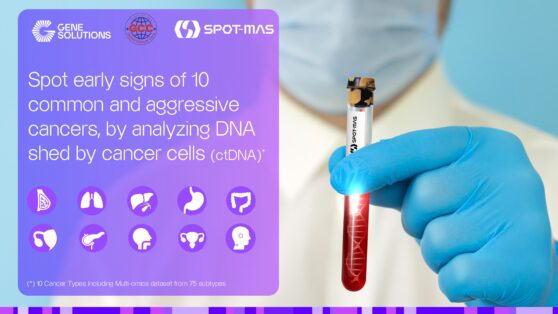
World Health Organization (WHO) data indicate that early detection can raise five‑year survival rates to above 80%, compared with less than 30% for advanced cases (1). To shift the diagnostic window, screening tools such as SPOT‑MAS—a non-invasive, blood‑based test designed to detect early cancer signals via circulating tumor DNA (ctDNA)—enable earlier detection and have the potential to improve patient outcomes.
“One of the biggest challenges patients face is not knowing where to begin,” says Dr. Shivam, Clinical Director at Global Cancer Care. “When symptoms are unclear or absent, people often delay evaluation. Early detection tools, combined with proper medical interpretation and navigation, can significantly reduce diagnostic delays and help patients move forward with clarity rather than fear.”
SPOT-MAS integrates multi-omics signals to enhance early detection accuracy
As part of its focus on earlystage intervention, GCC is facilitating access to SPOT-MAS. This AI-powered, multi-omics ctDNA blood test is designed to enhance early detection and more precisely predict tumor location, often before physical symptoms appear.
Key Features of SPOT-MAS:
- Detection Across 10 Common Cancers: Targets aggressive types including Breast, Lung, Colorectum, Stomach, Head & Neck, Endometrium, Esophagus, Pancreas, Ovary, and Liver-Biliary tract.
- High Precision: The first test in Asia to complete prospective clinical validation (2), offering AI-powered multiomics analysis with 99.8% specificity and 78.1% sensitivity.
- Non-Invasive Process: Requires only a single 10 mL blood draw, making it a viable addition to annual health check-ups.
SPOT-MAS is positioned as an affordable complement—not a replacement—to existing screening tests such as mammograms, colonoscopies, low-dose CT scans, Pap tests, and HPV testing. Its role is to bridge the gap for cancers that currently lack routine screening options, allowing clinicians to investigate earlier and act more decisively.
“Fear of cost is often the first barrier we see,” says Nivedita Basu, Founder of Global Cancer Care. “Many people delay screening because they believe cancer care will be financially devastating. At GCC, our role is to help individuals understand what a test result means, what steps are necessary, and how to plan care without panic. Early detection only changes outcomes when it is paired with professional guidance and trust.”
Celebrity Advocacy for Early Detection
To bridge the awareness gap, prominent Indian celebrities and influencers have joined this movement. This campaign features stars sharing personal stories and insights to encourage proactive screenings. Watch the campaign at: https://www.instagram.com/globalcancer.care
On this World Cancer Day, we invite individuals, families, and healthcare providers to move from reactive to proactive care. Waiting for symptoms is no longer the only option.
About Global Cancer Care
Global Cancer Care (GCC) is a patient-first cancer support and navigation initiative founded in 2025 by media professional Nivedita Basu. Built on the philosophy “Because I Care,” GCC focuses on addressing the emotional, informational, and navigational gaps individuals face at the earliest stages of a potential cancer diagnosis.
The organization supports individuals through symptom understanding, screening pathways, diagnostic interpretation, and connections to credible oncologists, helping patients move forward with clarity and confidence. GCC also works with patients undergoing treatment by offering guidance, emotional support, and access to adjunct care options where appropriate.
Headquartered in Mumbai, Global Cancer Care aims to make early detection, informed decision-making, and dignified care more accessible to patients and families, while reinforcing the importance of timely intervention and structured support in improving cancer outcomes.
About Gene Solutions
Gene Solutions is a global biotechnology company headquartered in Singapore with a mission to make advanced genomic solutions accessible and affordable. Leveraging multi-omics, NGS, and AI, the company offers a portfolio including multicancer early detection (SPOT-MAS) and comprehensive tumor profiling with ctDNA monitoring (K-TRACK, K-4CARE). Gene Solutions operates CAP-accredited NGS laboratories and has delivered millions of genetic tests worldwide since 2017. For more information, visit www.genesolutions.com and follow the company on LinkedIn and Facebook.
(1) World Health Organization (WHO). “Guide to Cancer Early Diagnosis.” Geneva: World Health Organization; 2017. Licence: CC BY-NC-SA 3.0 IGO.
(2) Nguyen, L. H. D., et al. (2025). Prospective validation study: a non-invasive circulating tumor DNA-based assay for simultaneous early detection of multiple cancers in asymptomatic adults. BMC Medicine, 23(1).