Gene Solutions & ATC introducing Oncology Portfolio in Türkiye at the 2nd International Hereditary Cancers Congress with Industry Symposium & Oral Presentation
At the 2nd International Hereditary Cancers Congress (IHCC) held in Antalya, Türkiye (February 5–8, 2026), Gene Solutions – co-hosted with its Türkiye’s distribution partner – ATC – organized a dedicated industry satellite symposium and delivered an oral presentation. The sessions explored how ctDNA, AI-powered multi-omics can advance outcomes across the cancer continuum, from early screening to precision treatment.
Industry Satellite Symposium: ctDNA Across the Cancer Care Continuum
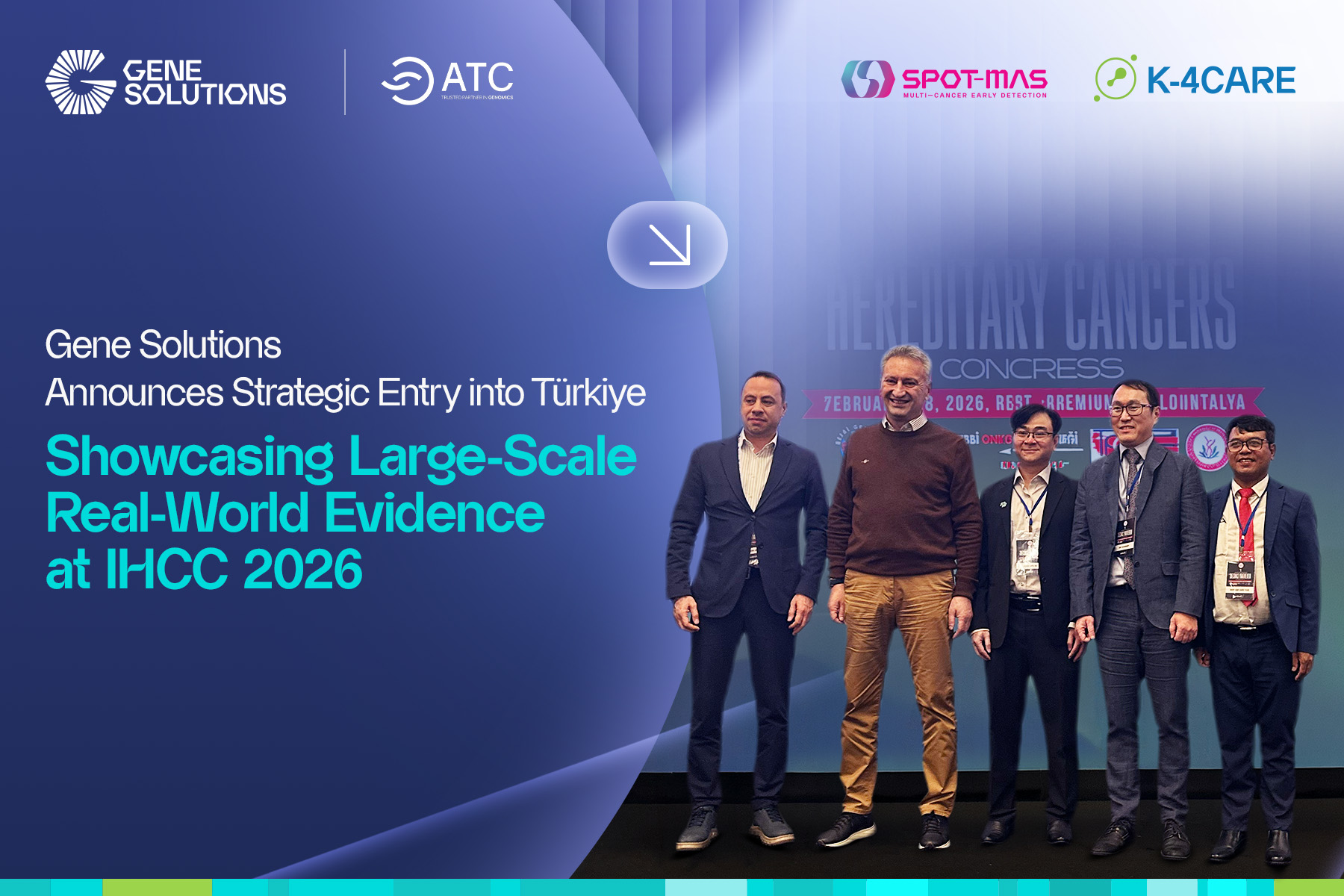
Chaired by: Prof. Mustafa ÖZDOĞAN and Prof. Taha BAHSİ
Faculty: Dr. Le Son Tran, Dr. Duy Sinh Nguyen, and Dr. Terence Aik Huang Tan
The symposium, titled “ctDNA across the Cancer Care Continuum – From Screening to Precision Care: Insights for High-Risk and Hereditary Populations,” attracted a global audience of medical oncologists, surgical oncologists, clinical geneticists, and laboratory directors.The session focused on the application of ctDNA across the continuum of precision oncology and presented actionable clinical evidence covering screening, treatment selection, and post‑treatment surveillance.
Scalable Cancer Screening with AI-Powered Multi-Omics (SPOT-MAS)
Dr. Le Son Tran opened the session by addressing the limitations of traditional single-organ screening. He presented the technological evolution of SPOT-MAS, a multi-cancer early detection (MCED) test designed to transform screening across Asia. By utilizing a multi-omics approach that integrates genetic, epigenetic, and fragmentomic signatures from a single blood draw, SPOT-MAS provides accurate, non-invasive detection for 10 cancer types and 75 subtypes.
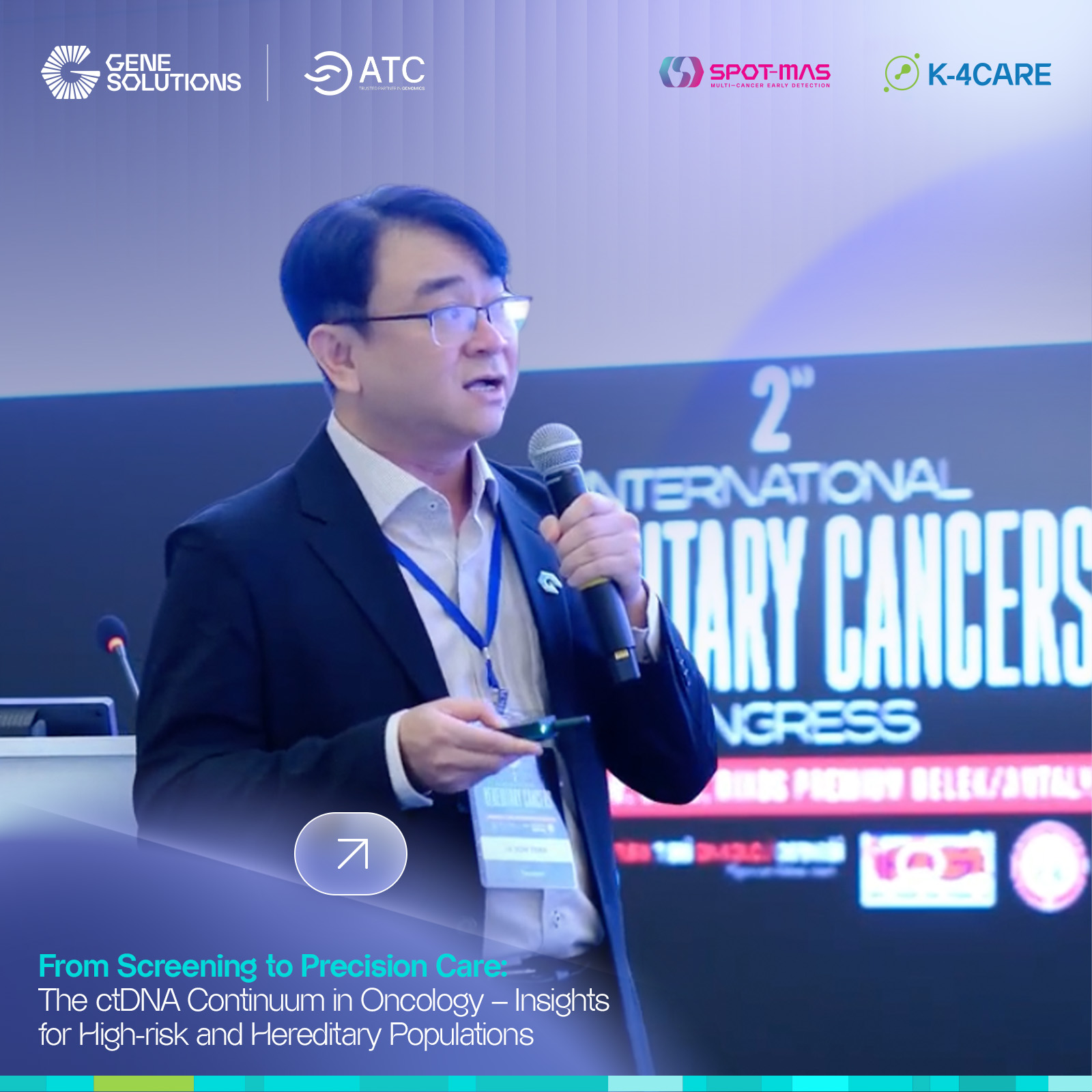
Dr. Le Son Tran highlighted the journey of SPOT-MAS from analytical validation to large-scale clinical trials. Unlike conventional assays, SPOT-MAS leverages machine learning to maximize sensitivity for early-stage tumors. A centerpiece of his presentation was the K-DETEK prospective study, the world’s third MCED clinical validation, which enrolled 9,024 asymptomatic participants. Recently published in BMC Medicine, K-DETEK demonstrated 78.1% sensitivity and 99.8% specificity. Its proprietary AI model for tissue-of-origin (TOO) prediction, trained on data from over 20,000 cancer patients and 25,000 healthy controls, achieved 84% TOO accuracy across both retrospective and prospective cohorts.
“For any screening tool to have a population-level impact, the test needs to be affordable,” Dr. Le Son Tran noted. “The challenge is balancing multi-cancer early detection performance with affordability – we achieve this via robust feature engineering, supervised machine learning, and high-quality multi-omics training datasets.”
Advanced Precision Treatment with An Integrated Comprehensive Genomic, Transcriptomic Profiling and MRD Monitoring Approach
Dr. Duy Sinh Nguyen shifted focus to the management of advanced disease, introducing the K-4CARE platform, a unified workflow from profiling to surveillance. K-4CARE is built to avoid delays, tissue exhaustion, and blind spots of sequential testing.
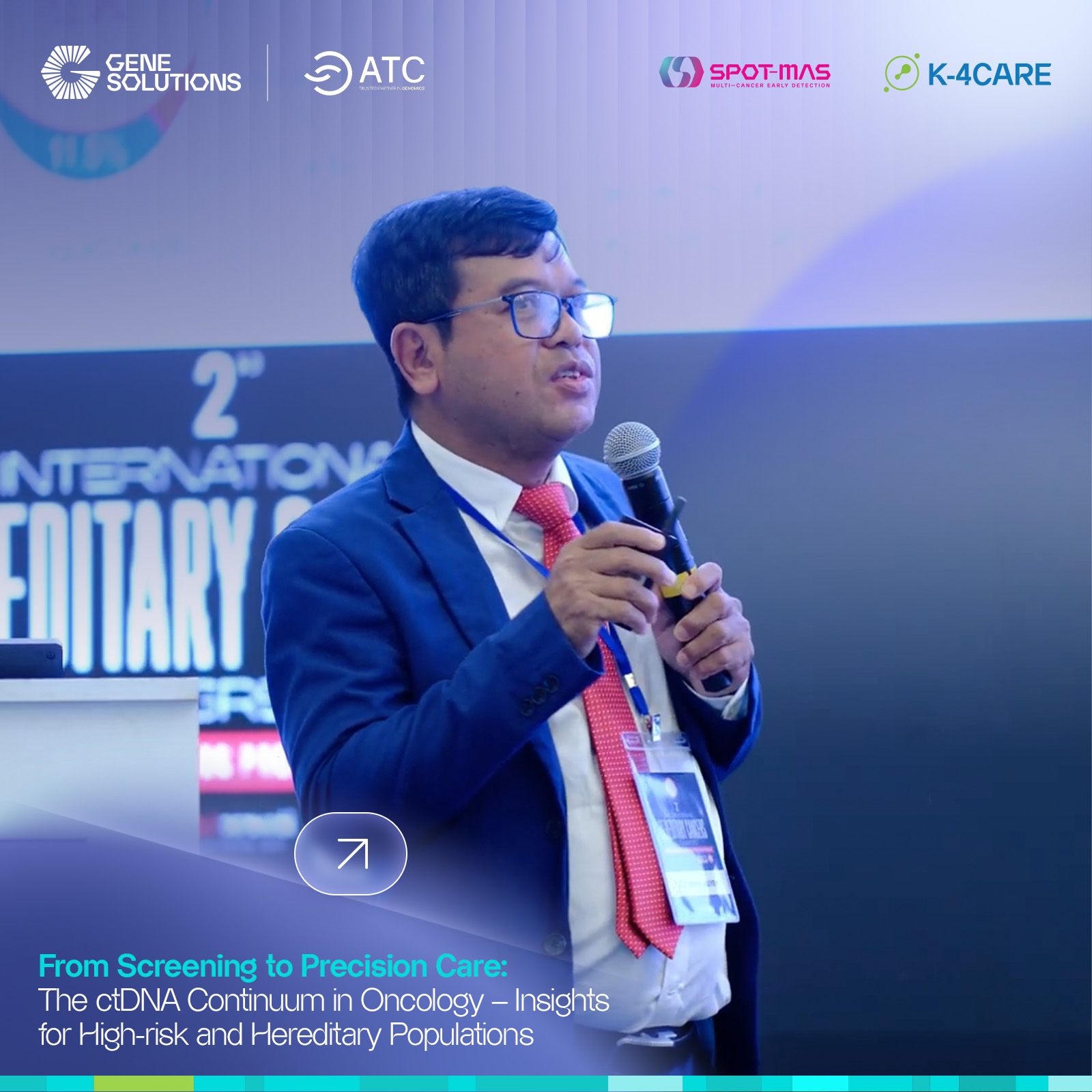
On the tissue side, K-4CARE sequences approximately 515 genes (DNA) and performs RNA-seq (~19,435 genes), which improves fusion detection by 20%. The platform also provides MSI, TMB, and HRD signatures, alongside oncovirus detection (HPV/EBV) and germline assessments. For Cancers of Unknown Primary (CUP), a machine-learning model predicts the tissue of origin with high accuracy (e.g., Lung 94.9%, Breast 96.7%). On the liquid biopsy side, the platform tracks ctDNA-MRD by personalizing up to 50 mutations, achieving a limit of detection (LOD) near 0.005%.
Precise Treatment Monitoring: ctDNA‑MRD in Current Clinical Practice and Future Directions
Concluding the symposium, Dr. Terence Aik Huang Tan offered a clinician’s perspective on the real-world application of ctDNA-MRD. He introduced the concept of “clinical spaces of need and equipoise” – areas where current guidelines lack clarity and liquid biopsy can offer the
highest impact.
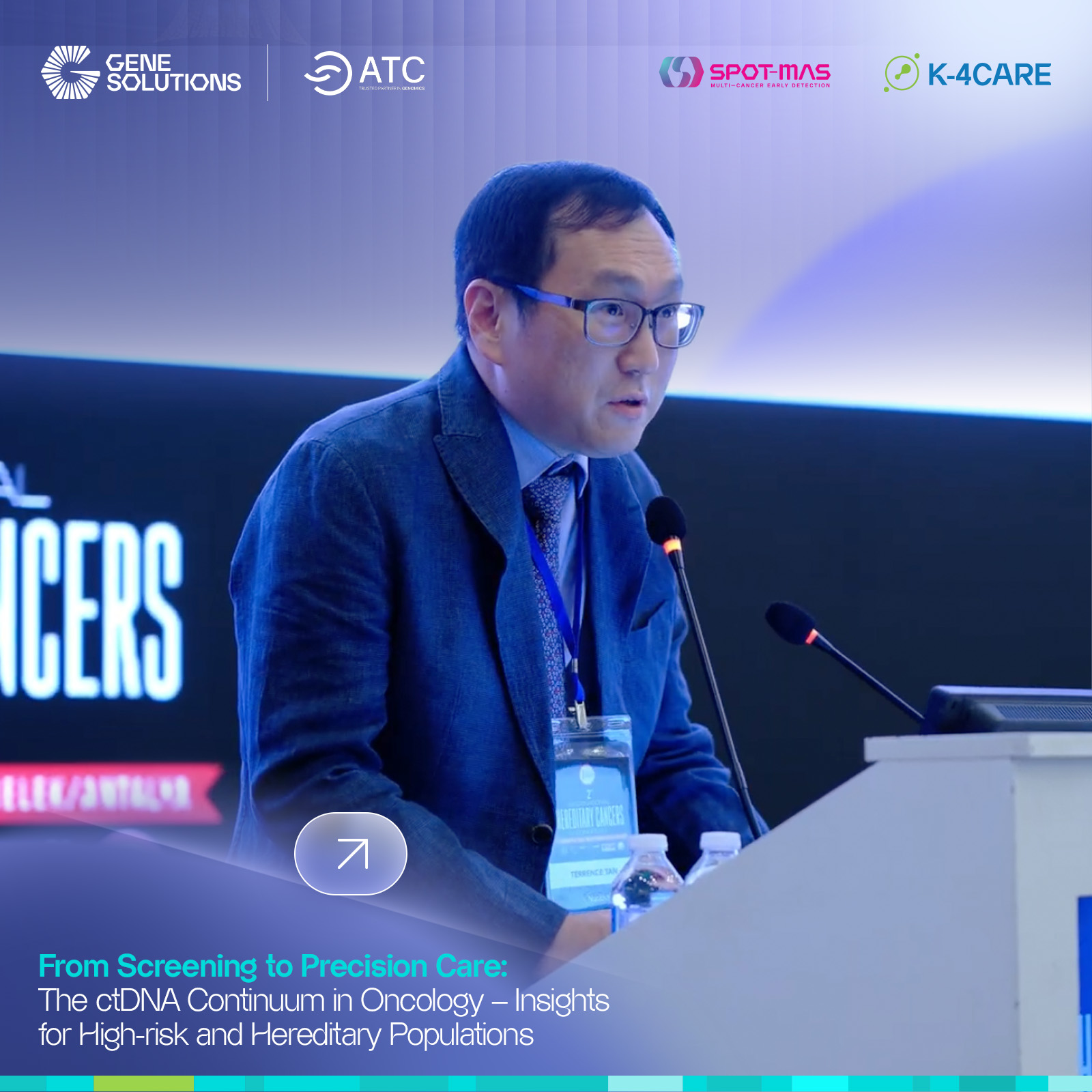
- Addressing Guideline Gaps: Dr. Tan highlighted colorectal (Stage II/III) and DLBCL as areas where ctDNA-MRD can resolve uncertainty regarding treatment escalation or de-escalation.
- Evidence-Based Outcomes: He noted that ctDNA-guided interventions have the potential to extend median overall survival by 2 to 5 years and significantly increase long-term survival probability..
- The Future of Decision-Making: Dr. Tan envisioned AI-assisted prediction as an “accessory tool” to support shared doctor-patient decision-making.
Dr. Terence Aik Huang Tan concluded: “Real‑world medicine has clinical spaces of need and equipoise where ctDNA‑MRD can demonstrate its greatest utility. We should design new trials in situations of equipoise and consider AI‑assisted prediction as an accessory tool for shared decision‑making.”
Oral Presentation: Largest Real-World Data of an MCED Test in Asia
In a dedicated oral session, Dr. L.H. Dang Nguyen presented results from the largest real‑world evidence (RWE) dataset in Asia evaluating a multi‑cancer early detection assay, SPOT‑MAS – positioning RWE as the essential evaluation of screening technology in day‑to‑day practice.
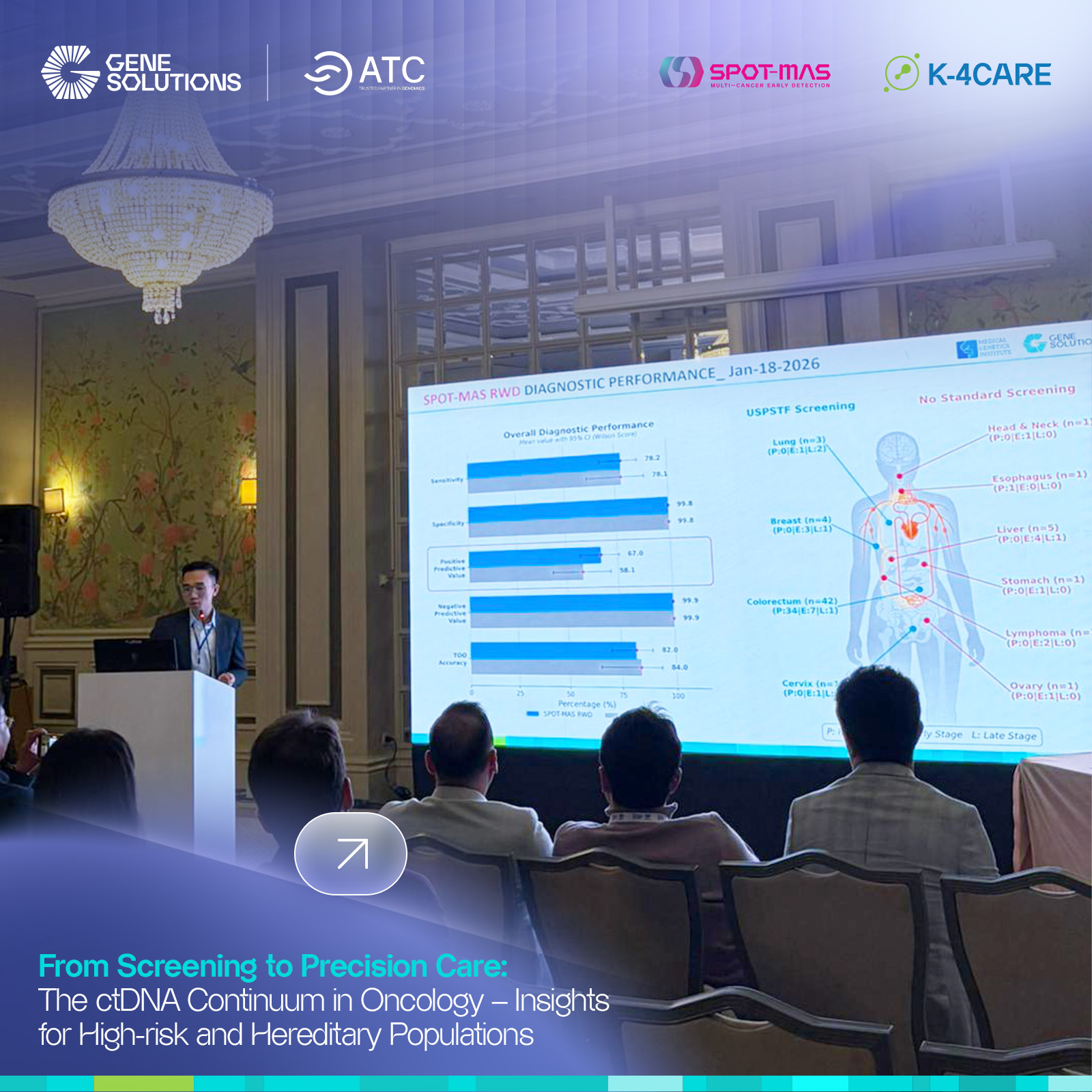
In a real‑world cohort of 12,281 individuals (median age 43 years) enriched for familial cancer risk, SPOT‑MAS showed sensitivity 78.2%, specificity 99.8%, PPV 67%, NPV 99.9%, and tumor‑of‑origin (TOO) accuracy 82.0% – demonstrating consistent
performance at scale and across diverse clinical contexts.
Dr. L.H. Dang Nguyen underscored a strategic shift toward “cancer interception”—the proactive detection and treatment of precancerous lesions to reduce future cancer burden. He outlined Gene Solutions’ next focus: high‑risk genetic and familial cohorts, with programs designed to validate longitudinal survival benefit and health‑economic value of liquid‑biopsy–enabled care pathways globally.
The Take‑Home
Across both the symposium and the oral presentation, speakers emphasized a unified theme: the integration of scalable multi‑omics screening, comprehensive tissue profiling, and ctDNA‑MRD monitoring could support earlier detection, more individualized therapy, and more reliable surveillance strategies for cancer patients.
The tools, presenters noted, are technically in place. The next steps will focus on clinical validation, harmonization across settings, and implementation pathways that ensure patients benefit from increasingly precise and proactive cancer care.